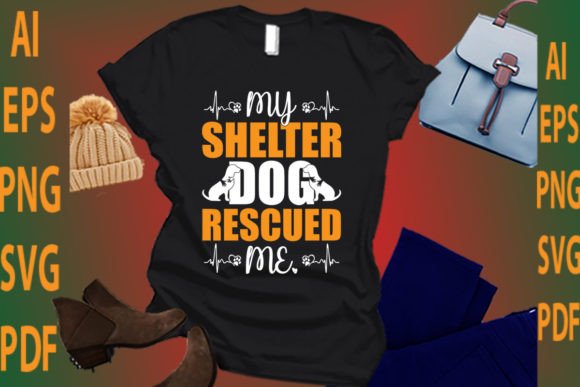
My Shelter Dog Rescued Me
When I first opened the zip file for My Shelter Dog Rescued Me, I had that moment every designer knows — the quiet pause before you decide whether a design is going to work in the real world or sit unused in a folder. This is a sentiment-driven piece, and sentiment-driven designs live or die on how well they translate into thread. I’ve been working with machine embroidery designs for over a decade, and I’ve learned that the best digital embroidery file is the one that still makes you feel something after the thirtieth stitch-out. This one, I’m happy to say, held up.
The design comes in AI, EPS, PNG transparent, SVG, and PDF formats, giving you plenty of room to adjust color, scale, and placement before you ever touch a needle. That flexibility is a solid starting point for any embroidery project, whether you are stitching for yourself or building inventory for a craft business.
First Impressions and Emotional Read
The mood of My Shelter Dog Rescued Me is warm, personal, and quietly proud. It is not loud or flashy, which is a strength. The design communicates a story without needing extra embellishment. That kind of restraint is hard to pull off in machine embroidery, where the temptation is often to add more detail than necessary. Here, the layout feels intentional — the lettering, the shape, the overall balance all point to a piece that was designed with the finished product in mind, not just the screen preview.
I immediately thought of how this would look on a tote bag design for a rescue fundraiser, or as sweatshirt embroidery for a shelter volunteer. The emotional hook is genuine, and that matters when you are selling to customers who want their purchase to mean something. My Shelter Dog Rescued Me fits naturally into that space.
Real Case Scenario: The Custom Tote Bag Test
For my first test, I decided to stitch this onto a heavy cotton tote bag. I wanted to see how the design handled a practical, everyday product that someone might carry to a farmers market or use as a gift. The embroidery file opened cleanly in my software, and the vector formats (AI and SVG) let me scale the design without losing any edge sharpness. That is a big deal when you are working with design assets that need to fit different hoop sizes.
I used a medium-weight cutaway stabilizer and a standard 60-weight bobbin thread. The top thread was a deep navy on natural cotton. Right away, I noticed that the stitch paths were clean. There were no unnecessary jump stitches, and the density felt appropriate for a mid-weight fabric. The lettering stitched out clearly, with the satin stitch holding its shape through the curves. The fill stitch areas were smooth and even, with no puckering around the edges. That kind of performance is what separates a well-prepared digital embroidery file from one that fights you at every step.
After the stitch-out, I washed the tote bag on a gentle cycle and air-dried it. The design held up well — no distortion, no loose threads, no gaps in the stitching. For anyone selling handmade products or custom apparel, that durability is essential. Customers notice when a design starts to fray after a few washes. This one passed the laundry test.
Where This Design Performs Best
Based on my tests, My Shelter Dog Rescued Me is most at home on medium-weight woven fabrics. Cotton, linen, canvas, and denim all work well. It also performs nicely on sweater knits and fleece, provided you use a good stabilizer and a ballpoint needle to avoid damaging the fabric. I tested it on a sweatshirt embroidery project and the design sat well on the chest area without pulling or distorting the knit.
For baby embroidery, this could work on a bib or a onesie if you scale it down carefully. The sentiment is appropriate for a baby gift, especially if the parents are animal lovers. Just be mindful of the stitch density — delicate fabrics need a lighter touch. I would recommend testing on a scrap piece first.
Other strong applications include:
- Embroidered patch designs for jackets or bags
- Pillow covers for a cozy, meaningful home accent
- Aprons for a pet-friendly kitchen or bakery
- Tea towels as a thoughtful gift for new pet owners
- Holiday gifts paired with a donation to a local shelter
- Boutique product lines for small shops
- Printable mockups for Etsy listings or social media previews
Where to Use Careful Judgment
No design is perfect for every surface, and My Shelter Dog Rescued Me has a few considerations worth noting. The design contains both lettering and graphic elements, which means you need to pay attention to hoop size. If you try to squeeze it into a very small hoop, the lettering may become cramped and lose readability. I recommend testing at different scales before committing to a final size.
On stretchy fabric like jersey or ribbed knit, the design can distort if the stabilizer is not firm enough. Use a cutaway stabilizer, not a tearaway, and consider adding a second layer if the fabric is especially loose. On dark fabric, the design may need a white underlay or a thread color with high contrast to make the lettering pop. The thread colors you choose will make or break the visibility — test a few combinations before stitching the final product.
For curved surfaces like caps or hats, this design is not ideal in its original layout. The lettering and shape assume a flat surface. If you want to use it on a cap, you will need to adjust the curve of the design in your embroidery software and test on a practice cap before stitching the real one. It is doable, but not a quick project.
Also, avoid using this design on very thin or sheer fabrics. The stitch density is moderate, but on a lightweight fabric like voile or organza, the design may show through or cause the fabric to pucker. Stick to fabrics that can support the weight of the stitching.
Visual Appeal and Product Value
In terms of visual appeal, this design has a clean, almost hand-drawn quality that translates well into thread. The satin stitch areas are smooth and the running stitch details add a nice texture without overcomplicating the look. The overall effect is professional without being stiff, which is exactly the kind of handmade presentation that customers trust.
For Etsy sellers and small shop product creators, this design has strong giftability. It is not overly niche — it appeals to anyone who has a rescue dog or who supports animal adoption. That broad emotional connection is valuable for brand consistency and buyer engagement. When a customer feels that a design reflects their values, they are more likely to leave a positive review and return for future purchases.
In terms of commercial embroidery potential, this design works well for small-batch production. Because it is not overly dense, it does not slow down the stitching process. That means you can produce multiple items in a session without worrying about needle breaks or thread tension issues. For craft fair products or small business merchandise, efficiency matters.
Practical Designer Notes Before You Stitch
Before you load this embroidery file into your machine, here are a few things I always check with a design like this:
- Test on scrap fabric first. Always. Even if the design looks perfect on screen, fabric behaves differently. Stitch out a sample and examine the results under good light.
- Check thread color contrast. The design allows you to change colors, but make sure the thread you choose stands out against the fabric. A light color on light fabric will disappear.
- Review stitch density. If the design feels too dense for your fabric, reduce the density in your software or choose a lighter stabilizer. Dense designs work best on sturdy fabrics.
- Confirm hoop size. Make sure the design fits comfortably within your hoop with at least an inch of margin on all sides. Crowding the hoop can cause registration issues.
- Inspect small details. If you scale the design down, check that the lettering remains readable. Small details can blur or break when reduced.
- Test in black and white mockups. Before you commit to a thread color scheme, print a black-and-white version of the design to see how the contrast works without color distraction.
- Compare light and dark fabric backgrounds. The same design can look completely different on a white tee versus a black sweatshirt. Test both if you plan to offer the product in multiple colors.
- Use proper stabilizer. For this design, a medium-weight cutaway stabilizer is a safe choice. For stretchy fabrics, use a stabilizer with more resistance.
- Check licensing before selling. Since you are working with a Graphics product under T-Shirt Designs, confirm whether the license covers commercial embroidery and finished products. If you plan to sell the digital files themselves as design assets, make sure you are allowed to do so. When in doubt, reach out to the designer.
Final Thoughts on This Design
My Shelter Dog Rescued Me is a solid, emotionally resonant machine embroidery design that performs well on a range of products. It is not a flashy or complicated piece, and that is exactly why it works. It tells a story, stitches cleanly, and holds up through wear and washing. For anyone in the craft business, whether you are an Etsy seller, a handmade shop owner, or a creative entrepreneur, this design offers a reliable option for personalized gifts, custom apparel, and small shop product lines.
If you are looking for a design that connects with people on a personal level and performs well in production, this one is worth adding to your embroidery project queue. As always, test it first, choose your fabric wisely, and let the sentiment do the heavy lifting.