Property of a Therapy Dog: Real Talk for Embroiderers
I’ve tested hundreds of graphics in the hoop, and I’ve learned that not every T-Shirt Design translates into a reliable embroidery project. Some rely too much on gradients that turn into a dense, stiff mess. Others require a 10x10 hoop for text that should fit on a toddler’s back. So when I sat down with the “Property of a Therapy Dog” design, I evaluated it the same way I would any new Graphic I was considering for my own shop: does it stitch cleanly, does it sell well, and does it make the finished product look professional? After running it through a few real projects, I can share exactly what you need to know before you buy, digitize, or sew.
First Look: Clear, Confident, and Market-Ready
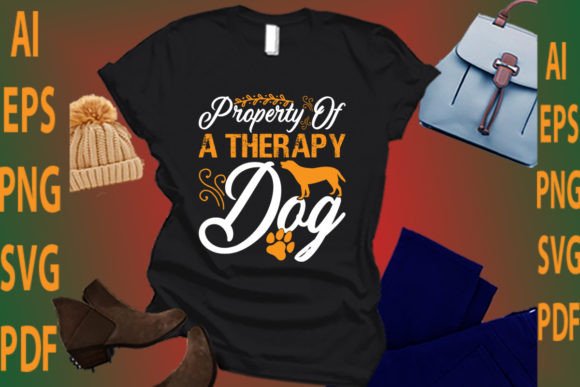
The design has an immediate, no-nonsense personality. It’s bold, readable, and carries the kind of authority that suits a therapy dog’s role. The layout is balanced, which is exactly what I want to see in a machine embroidery design. It doesn’t rely on tiny decorative flourishes that will vanish in a 4x4 hoop. Instead, it gives you solid, clean lettering that reads well from across a room. That’s crucial if your customer is a handler, a facility, or a small shop selling to the therapy dog community. The mood is respectful and warm, not cartoonish, which opens up a wider product range. You can put this on a structured cap, a canvas tote, a polo shirt for a professional setting, or a cozy sweatshirt for casual wear, and it will look appropriate in every context.
Translating the File Formats Into Stitched Reality
You receive this design as an AI, EPS, PNG, SVG, and PDF file, which is a smart set of design assets for an embroidery workflow. The vector formats (AI, EPS, SVG) let you open the artwork in your digitizing software without losing quality. I loaded the SVG into my digitizer and immediately checked the shapes. The lettering was clean and closed, which meant my satin stitch edges would stay crisp. The PNG gives you a quick mockup option for Etsy listings or social media previews, and the PDF is perfect for sending color proofs to a client before you sew. Because you can change the design color using the vector files or the PDF, you can show a buyer exactly how it will look in teal thread on a navy sweatshirt. That kind of flexibility adds real value to a digital product for craft business owners who want to offer multiple colorways.
Real-Life Scenario: A Custom Tote Bag for a Therapy Dog Team
My practical test came from an order placed by a local therapy dog trainer. She wanted twelve heavy-duty tote bags for her handlers, each embroidered with the “Property of a Therapy Dog” design. I opened the AI file, removed the background fill from the digital version, and digitized the lettering using a satin stitch at about 4mm wide. Because the text was bold, I didn’t need a dense fill stitch behind it. That kept the stitch count low and the flexibility high. I hooped a canvas tote using a medium cutaway stabilizer and a large hoop. The stitching came out clean, with no gaps or pull points. The trainer told me her clients loved how professional it looked compared to printed totes. That’s the power of a well-prepared embroidery file and a thoughtful design base. It turned a plain bag into a respected, identifiable piece of gear.
Where It Shines: The Best Products for This Design
- Custom Apparel: Sweatshirts, t-shirts, and polo shirts are the obvious candidates. The bold lettering stands up well to heavy fleece and cotton knits.
- Tote Bags: Works beautifully on canvas totes, market bags, and even drawstring backpacks for training sessions.
- Embroidered Patches: If you add a merrow border, this design becomes an excellent iron-on patch for vests, jackets, or leashes.
- Holiday and Personalized Gifts: A thermos, a pillow cover, or a set of tea towels with this design makes a thoughtful, handmade product for a therapy dog volunteer.
- Baby and Kids’ Products: Scaled down slightly, it fits well on the back of a toddler’s hoodie or a small lap blanket for nursing homes.
Where to Exercise Care and Caution
Every experienced embroiderer knows that a design that looks great on screen can fail in the hoop if you ignore fabric and placement. Here are the specific areas where I recommend testing before production:
- Small Hoop Sizes: If you only have a 4x4 hoop, check the width of the full phrase. You may need to scale it down, and tiny satin stitch lettering can close up below 6mm height. Always test the embroidery file at your intended size on scrap fabric first.
- Stretchy or Thin Fabrics: On lightweight t-shirts or single-knit fabrics, use a tear-away or cutaway stabilizer that prevents the stitches from distorting the grain. A dense fill stitch in the background would make the fabric pucker, so keep the stitch density moderate.
- Curved Surfaces (Caps and Hats): The design is text-heavy, so if you want to put it on a cap front, you may need to curve the text slightly in your software to match the crown. A straight line of text on a curved cap can look amateurish.
- Dark Fabrics: Because the design is text-based, use a thread color that pops. White, gold, or a bright contrasting color works best. The PDF is great for showing a customer exactly how a light thread will look on a navy or black background.
- High Stitch Density Check: I always examine the stitch count and density in my digitizing software before sewing. If the original Graphic has a heavy solid background, consider converting it to a running stitch or removing it entirely to keep the fabric soft and wearable.
Designer’s Technical Notes for a Flawless Finish
I’ve been burned by skipping the test stitch, so I recommend the same discipline to every Etsy seller and craft business owner who wants to use this design. First, test the design on the exact fabric you plan to use. Check thread color contrast by stitching a small sample section. I also run a black and white mockup in my software to see if the shapes hold up without relying on color. For stabilizer, I use a medium-weight cutaway for knit fabrics and a tear-away for wovens like twill or canvas. If the design includes any delicate inner lines, make sure your needle is sharp and your tension is balanced. And before you sell any finished products, confirm the licensing terms inside the zip file. Most digital files for T-Shirt Designs allow commercial use of the finished item, but the exact permissions vary. You want to make sure you can legally produce and sell the embroidered goods without issues.
Business Fit: Why This Graphic Works for Small Shops
From a market perspective, the therapy dog niche is dedicated and growing. Handlers want gear that identifies their dog’s role clearly. Trainers and facilities often buy in bulk for graduation gifts or volunteer appreciation. If you run a handmade shop on Etsy, this design gives you a ready-to-use asset that you can offer as a personalized gift. You can let the customer choose their thread colors using a chart and a mockup generated from the PNG or vector file. It also works beautifully as a printable mockup in your listings. Showing a mockup of the design on a tote or a sweatshirt helps buyers visualize the finished product, which increases conversion rates. For small shop products, this design adds an element of trust and professionalism that customers associate with higher quality.
Final Thoughts on the Embroidery Project
The “Property of a Therapy Dog” Graphic is a solid investment for any commercial embroidery operator, hobbyist, or digital product seller who knows how to handle a text-based layout. It gives you a clean, versatile base that stitches out reliably when you use the right stabilizer, hoop size, and thread contrast. It’s not a fussy, over-digitized design that tries to do too much. Instead, it respects the craft and lets the message do the work. Whether you’re stitching it onto a sweatshirt for a handler, a patch for a vest, or a tote for a fundraising event, this design will deliver a finished product that your clients will be proud to wear and use. Add it to your embroidery file library, test it once on your own machine, and you’ll quickly see why it belongs in regular rotation for custom orders.