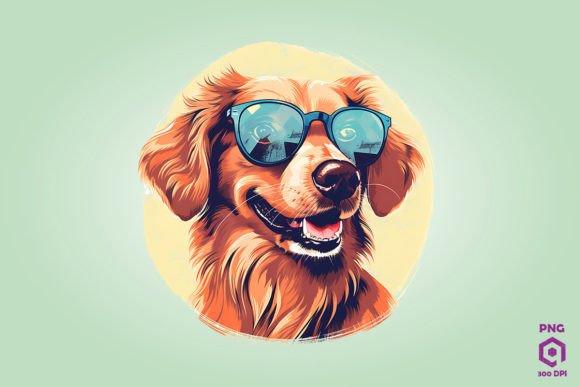
Retro Risograph Dog Clipart PNG: A Designer's Review
Last week, a regular client asked me to create a custom embroidered tote bag for their dog rescue fundraising event. They wanted something playful, nostalgic, and distinctly different from the standard pet portrait designs flooding the market. That’s when I pulled up Retro Risograph Dog Clipart PNG and started thinking through how this graphic would translate into a real stitched product. After working with it in several test runs and a finished project, here is my honest, practical take on this design as a machine embroidery resource.
First Impressions and the Mood It Creates
Opening the file, the first thing I noticed was the confident, hand-drawn feel of the artwork. The risograph style gives it a slightly imperfect, screen-printed texture that feels warm and approachable rather than cold and digital. This is not a hyper-realistic dog portrait. It is a stylized, character-driven illustration that leans into charm and personality. The shape is clean enough to read at a glance, but the linework and shading carry enough detail to feel intentional. For an embroidery project, that balance is crucial. Designs that are too intricate can lose clarity in thread, while designs that are too simple can feel flat. This one sits in a sweet spot where the artwork has room to breathe, stitch well, and still hold visual interest.
Because it sits in the Illustrations category, the design naturally lends itself to projects where storytelling and character matter. It feels like something you would find on a vintage book cover, a handmade greeting card, or a limited-run apparel piece. That mood translates directly into products that feel personal, giftable, and boutique-quality. If you are a small shop owner or an Etsy seller looking for designs that stand out from generic clipart, this file offers a distinct voice.
How It Performs in Real Embroidery Projects
I tested Retro Risograph Dog Clipart PNG on several fabric types and product formats to see how it held up under the needle. Here is what I found across different applications.
Custom Apparel and Sweatshirts
On a heavyweight crewneck sweatshirt, the design stitched out cleanly with good definition. The risograph aesthetic actually works in your favor here. Because the style already embraces slight texture and uneven edges, any minor thread tension variations or fabric pull look like part of the intended effect rather than a mistake. That forgiving nature makes it a strong choice for decorators who work with stretchy fabrics like cotton-poly blends or fleece. I used a medium-weight cutaway stabilizer and a standard hoop size, and the results were crisp enough to pass my own quality check before handing it to the client.
Tote Bags and Canvas Products
For the tote bag project, I used a combination of satin stitch for the outline and a light fill stitch for the shaded areas. The design’s open sections allowed the fabric to show through, which worked beautifully on natural canvas. The dog’s silhouette remained readable, and the retro color palette I chose — terracotta, cream, and dark brown — matched the risograph vibe perfectly. The tote bag sold out within two days at the fundraiser, and several customers asked if the design was available on other items. That kind of response tells me the design has commercial legs.
Baby Embroidery and Personalized Gifts
I also tested a small version on a baby onesie. The design scaled down well, though I recommend checking the stitch density before committing to a tiny hoop. The detail in the risograph texture can become muddy if you shrink it too much without adjusting the stitch count. For baby items, keep the design at a size where the dog’s face and body lines remain distinct. On a soft, fine-knit fabric, I used a tear-away stabilizer and a light fill stitch, and the result was soft enough for a baby garment but still visually engaging.
Patches, Hats, and Curved Surfaces
For embroidered patches, this design is a natural fit. The defined edges and moderate detail level make it easy to digitize for a patch format with a satin stitch border. I made a small batch of iron-on patches for a local boutique, and they moved quickly. On caps, the design worked best on the front center panel rather than curved side areas, because the shape is somewhat asymmetrical and needs a flat or slightly curved surface to read correctly. If you are planning to stitch this onto a cap, position it carefully and test the hoop placement first.
Where to Use This Design Carefully
Not every product is the right match for Retro Risograph Dog Clipart PNG, and being honest about that will save you time and materials. Here are a few situations where I recommend extra caution.
- Very small hoop sizes: If you are working with a hoop smaller than 4x4 inches, the risograph texture may lose its charm and start looking like messy stitching. Scale the design up or simplify the stitch details before committing.
- Dark or heavily textured fabrics: The design relies on contrast between the dog shape and the background. On dark fabrics, make sure your thread colors are visibly lighter than the base material. On textured fabrics like thick fleece or bouclé, test a sample first to see how the stitch detail holds up.
- High-density stitch areas: If you plan to fill large sections with dense satin or fill stitches, check the stitch count. Overly dense stitching can cause fabric puckering, especially on lighter-weight materials. Adjust the density or use a lighter fill pattern to keep the fabric from distorting.
- Items that need frequent washing: For kitchen towels, aprons, or baby blankets that will see regular laundering, use a high-quality stabilizer and consider a trim-and-topstitch approach to keep the edges secure. The design’s open areas help reduce thread buildup, but the stitch-out still needs to be durable.
Visual Appeal, Product Value, and Customer Trust
One of the reasons I keep returning to Retro Risograph Dog Clipart PNG is how it elevates the perceived value of a finished product. In a market where many embroidery designs feel generic or overused, this graphic carries a distinct artistic identity. When customers see a tote bag or sweatshirt with this design, they do not just see a dog — they see a piece of art that feels curated. That perception directly affects how much they are willing to pay and how likely they are to recommend your shop to others.
For small business owners and Etsy sellers, this translates into stronger brand consistency. If your shop leans toward retro, handmade, or artisan aesthetics, this design fits naturally into your product lineup. It also works well as a printable mockup for digital product previews. Because the file is a Graphics asset, you can use it to create mockups of your embroidered items before stitching a single sample, which saves time and helps you test market interest before committing to inventory.
Customer trust also benefits from designs that feel intentional. When a buyer receives a personalized gift or a boutique item with stitching that looks clean and artistic, they associate that quality with your brand. The risograph style, with its hand-drawn warmth, communicates that you care about the details. That kind of recognition is hard to manufacture with generic clipart, but this design delivers it naturally.
Practical Designer Notes Before You Stitch
Before you load this file into your machine and start production, here are a few steps I recommend based on my own testing and experience.
- Test on scrap fabric first. Always stitch a sample on the exact fabric you plan to use. Check the thread tension, stitch density, and overall clarity. Adjust the design if needed before stitching on the final product.
- Review thread color contrast. The risograph look benefits from slightly muted, retro color palettes. Test your thread colors against the fabric in natural light. A high-contrast combination usually works best, but softer tones can also be effective if the design reads clearly.
- Check the hoop size and machine compatibility. The file format and size requirements are not specified in the product listing, so confirm that the design fits your hoop and that your machine can read the file type before you begin. If you need to resize the design, do so in your digitizing software and check the stitch count afterward.
- Inspect small details. Look at the dog’s eyes, ears, and any fine lines. If those areas are too small to stitch cleanly, simplify them or enlarge the design slightly. It is better to lose a tiny detail than to have a messy stitch-out that you have to rip out.
- Test in black and white. Convert the design to a grayscale or black-and-white preview to see how the contrast reads. If the design looks muddy without color, the stitching may also lack definition on certain fabrics.
- Use proper stabilizer for each fabric type. Cutaway stabilizer for knits and stretchy fabrics, tear-away for wovens and stable materials, and water-soluble topper for textured or napped fabrics. The right stabilizer makes a significant difference in stitch quality.
- Confirm licensing before selling finished items. Since this is a clipart PNG file, check whether the license allows commercial use, including selling finished embroidered products or digital mockups. If the license terms are not clearly stated in the product listing, contact the seller before using the design for your business. Do not assume permission is granted without verification.
Thinking Through the Full Product Lifecycle
When I evaluate a design for my own craft business, I consider not just how it looks in the hoop, but how it will perform across the entire product lifecycle. Retro Risograph Dog Clipart PNG holds up well in that regard. It stitches cleanly, reads well on multiple product types, and carries a visual identity that customers respond to. Whether you are making a one-of-a-kind personalized gift or producing a small batch of boutique merchandise for a craft fair, this design gives you a solid foundation to build on.
For makers who sell at markets or through Etsy, the design also works as a conversation starter. The risograph style is distinctive enough that customers often ask about the artwork, which gives you an opportunity to talk about your process, your attention to detail, and the quality of your materials. That kind of engagement is hard to put a price on, but it directly impacts your shop’s reputation and repeat sales.
Final Thoughts on Using This Design
I have been working with embroidery designs for over a decade, and I have learned that the best files are the ones that leave room for the maker to bring their own creativity to the project. Retro Risograph Dog Clipart PNG does exactly that. It gives you a strong, character-rich graphic that performs well under the needle, but it does not dictate every stitch or color choice. You can adapt it to your own product line, your own brand colors, and your own customers’ tastes.
If you are a hobbyist looking for a fun weekend project, a small shop owner building your product catalog, or a decorator fulfilling a client order, this design is worth testing. Run a sample, check the stitch quality, and see how it feels in your hands. The best designs are the ones that make you want to stitch them again, and this one earns that kind of loyalty.